Transformer-based UPS for Industry

Why Transformer-Based UPS Systems Remain a Reliable Power Protection Solution for Industrial Applications

Published: June 25, 2026

Introduction

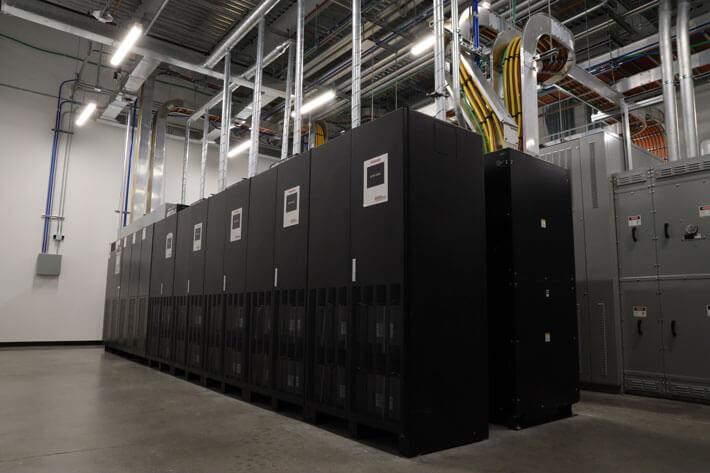
In modern industrial environments, power quality and power continuity are critical factors that directly impact productivity, equipment reliability, and operational safety. Manufacturing facilities, data centers, process industries, utilities, oil and gas plants, transportation infrastructure, and critical facilities increasingly rely on sensitive electronic equipment and automated systems that require a stable and uninterrupted power supply.Despite significant advancements in electrical infrastructure, industrial facilities continue to face various power-related challenges such as voltage fluctuations, harmonic distortion, transient surges, brownouts, blackouts, and electrical noise. These disturbances can cause equipment malfunction, unexpected downtime, production losses, and costly maintenance issues.To address these challenges, industries deploy Uninterruptible Power Supply (UPS) systems as a critical layer of power protection. Among the available UPS technologies, transformer-based UPS systems remain a preferred solution for many industrial and mission-critical applications due to their exceptional robustness, electrical isolation capabilities, and ability to withstand demanding operating conditions.
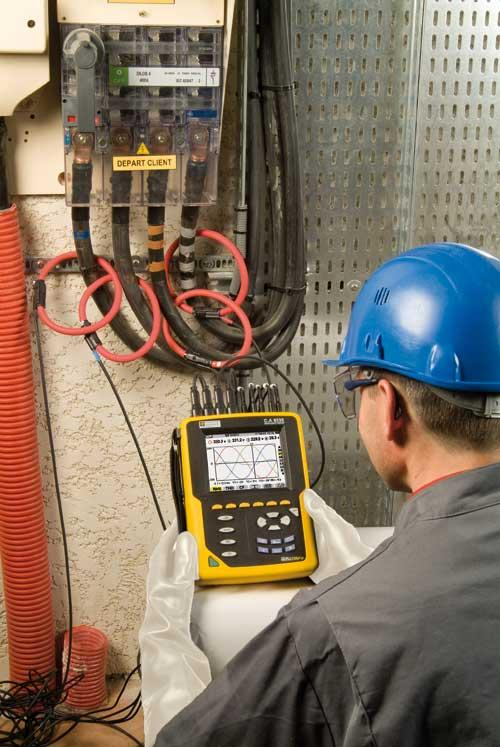
Common Power Quality Issues in Industrial Facilities

1. Voltage Sags and Brownouts

Voltage sags occur when the supply voltage temporarily drops below its nominal level. These events are commonly caused by:
  • Large motor startups
  • Utility network disturbances
  • High inrush current loads
  • Faults in nearby electrical systems
Even short-duration voltage dips can disrupt industrial controllers, servers, automation equipment, and production lines.

Impact

  • Unexpected equipment shutdowns
  • Process interruptions
  • Production losses
  • Reduced equipment lifespan

2. Complete Power Outages

Industrial operations often depend on continuous power availability. Utility failures, grid disturbances, and infrastructure faults can result in complete power interruptions.

Impact

  • Production downtime
  • Data loss
  • Equipment damage
  • Safety risks
  • Missed production targets

3. Harmonic Distortion

Modern industrial facilities use numerous nonlinear loads such as:
  • Variable Frequency Drives (VFDs)
  • Servo systems
  • Rectifiers
  • Industrial power supplies
  • Automated machinery
These loads generate harmonic currents that distort the electrical waveform.

Impact

  • Overheated transformers
  • Increased cable losses
  • Reduced equipment efficiency
  • Premature component failure

4. Electrical Noise and Transients

Switching operations, lightning strikes, and large industrial equipment can introduce electrical noise and transient voltage spikes into the power network.

Impact

  • PLC communication errors
  • Instrumentation inaccuracies
  • System instability
  • Hardware damage

5. Grounding and Isolation Challenges

Industrial environments often contain multiple power sources and extensive electrical networks. Improper grounding or common-mode noise can negatively affect sensitive equipment.

Impact

  • Measurement inaccuracies
  • Communication failures
  • Increased risk of equipment malfunction


What Is a Transformer-Based UPS?

A transformer-based UPS is an uninterruptible power supply system that incorporates an isolation transformer within its power conversion architecture.Unlike many transformerless UPS designs that primarily focus on efficiency and compact size, transformer-based UPS systems prioritize:
  • Electrical isolation
  • Fault tolerance
  • Load protection
  • Short-circuit capability
  • Industrial-grade reliability
These systems are commonly deployed in environments where power integrity and operational continuity are essential.Applications include:
  • Manufacturing plants
  • Semiconductor facilities
  • Oil and gas installations
  • Power generation stations
  • Transportation systems
  • Healthcare facilities
  • Data centers
  • Industrial automation systems

Key Features of Transformer-Based UPS Systems

Galvanic Isolation

One of the most significant advantages of transformer-based UPS systems is galvanic isolation between input and output circuits.This isolation helps prevent:
  • Ground loop issues
  • Common-mode noise
  • Electrical interference
  • Fault propagation

Benefit

Sensitive equipment receives cleaner and more stable power.

Superior Short-Circuit Handling Capability

Industrial facilities often experience high fault currents and demanding load conditions.Transformer-based UPS systems typically provide:
  • High overload tolerance
  • Strong short-circuit capability
  • Improved protection during fault conditions

Benefit

Greater system resilience and operational reliability.

Enhanced Electrical Noise Rejection

The isolation transformer acts as a natural barrier against electrical disturbances.It helps suppress:
  • Voltage spikes
  • Electrical noise
  • Electromagnetic interference (EMI)
  • Common-mode disturbances

Benefit

Improved performance of automation systems, PLCs, servers, and industrial electronics.

Compatibility with Harsh Industrial Loads

Industrial environments often contain:
  • Large motors
  • Compressors
  • Pumps
  • Welding equipment
  • High-inrush-current devices
Transformer-based UPS systems are designed to handle these demanding load profiles more effectively than many standard UPS solutions.

Benefit

Reliable operation even under challenging electrical conditions.

High Reliability for Mission-Critical Operations

Transformer-based UPS systems have long been trusted in applications where power interruptions cannot be tolerated.Their robust architecture contributes to:
  • Long operational life
  • High system availability
  • Stable performance under varying load conditions

Benefit

Reduced risk of downtime and operational disruption.

Benefits of Using Transformer-Based UPS in Industrial Applications

1. Maximum Equipment Protection

Industrial equipment represents a significant capital investment.Transformer-based UPS systems provide multiple layers of protection against:
  • Power outages
  • Voltage disturbances
  • Harmonics
  • Electrical noise
  • Fault conditions

Result

Longer equipment lifespan and reduced maintenance costs.

2. Reduced Production Downtime

Unexpected power events can stop entire production lines.A transformer-based UPS maintains continuous power delivery during utility disturbances and outages.

Result

Higher production availability and improved operational continuity.

3. Improved Power Quality

By isolating critical loads from power disturbances, transformer-based UPS systems help deliver cleaner power to connected equipment.

Result

Improved system stability and reduced operational issues.

4. Increased Reliability for Automation Systems

Modern industrial operations rely heavily on:
  • PLCs
  • SCADA platforms
  • Industrial computers
  • Communication networks
  • Control systems
These systems require stable power to function properly.

Result

Improved process reliability and fewer unexpected failures.

5. Enhanced Protection for Critical Infrastructure

Industrial facilities often operate critical systems that must remain available at all times.Examples include:
  • Emergency control systems
  • Data processing equipment
  • Security systems
  • Communication networks
  • Process control infrastructure

Result

Greater operational safety and business continuity.

6. Lower Long-Term Operational Risk

Although transformer-based UPS systems may require a larger initial investment than some transformerless alternatives, their durability and superior protection capabilities often reduce long-term operational risks.

Result

Lower total cost of ownership and improved return on investment over the equipment lifecycle.

Related Articles

Continue reading about industrial automation and smart manufacturing