What Are PLC and SCADA? Core Technologies Behind Modern Industrial Automation.
Behind modern factories capable of operating automatically 24/7 are two key technologies working together: PLC (Programmable Logic Controller) and SCADA (Supervisory Control and Data Acquisition). These two systems form the foundation of modern industrial automation, supporting industries ranging from manufacturing and energy to water treatment and food and beverage production.PLCs are responsible for controlling industrial machines and processes in real time, while SCADA systems are used to monitor, control, and collect operational data from various field devices. The combination of these technologies enables companies to improve production efficiency, reduce human error, and accelerate data-driven decision-making.In the era of Industry 4.0, PLC and SCADA systems are becoming increasingly important as industries require more integrated, automated, and remotely accessible systems. Today, these technologies have become a key component of digital transformation across industrial sectors in Indonesia and around the world. PLC and SCADA
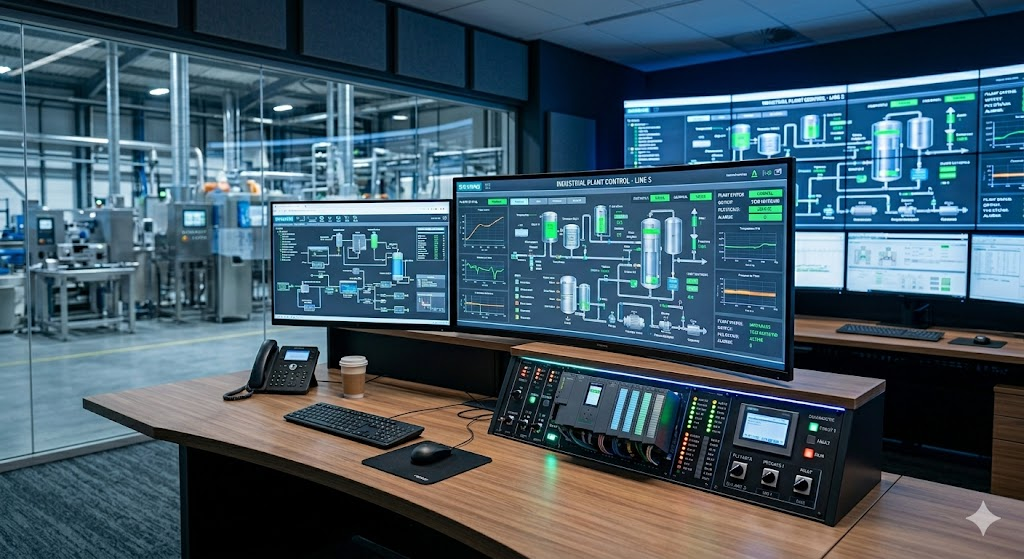
A PLC, or Programmable Logic Controller, is a specialized industrial computer designed to control machines and automated processes in real time. PLCs are used to replace conventional relay systems, which previously required extensive wiring and were difficult to modify.A PLC system works by receiving input from sensors, processing programmed logic, and then generating outputs to control devices such as motors, valves, conveyors, and other actuators. Since PLCs are designed for industrial environments, they offer high resistance to extreme temperatures, vibration, dust, and electrical interference.PLCs are commonly programmed using ladder logic, a visual programming method that resembles electrical circuit diagrams. This approach makes it easier for technicians and engineers to troubleshoot and maintain industrial control systems.Today, PLCs are widely used across various industrial sectors, including:
What Is SCADA (Supervisory Control and Data Acquisition)?
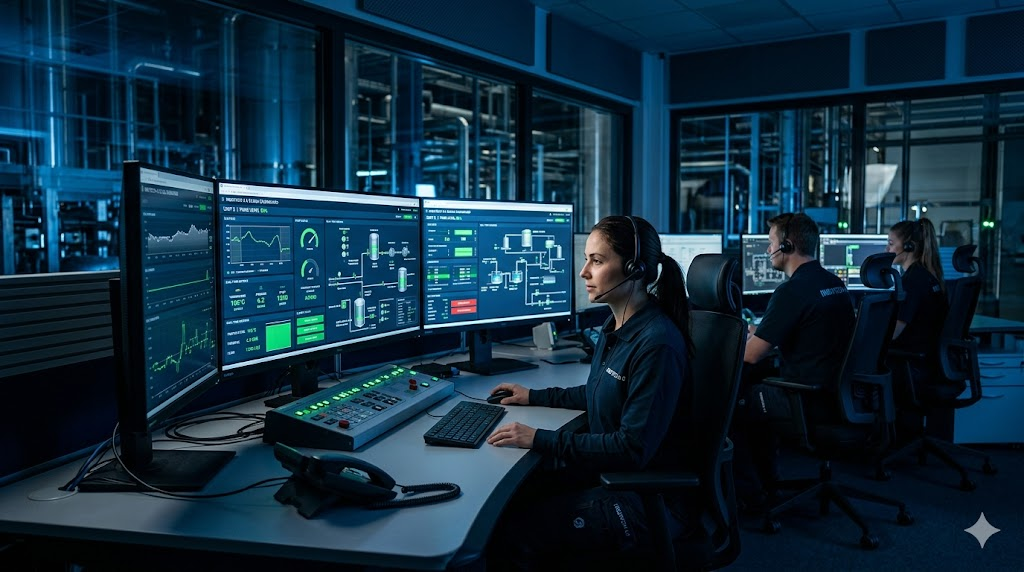
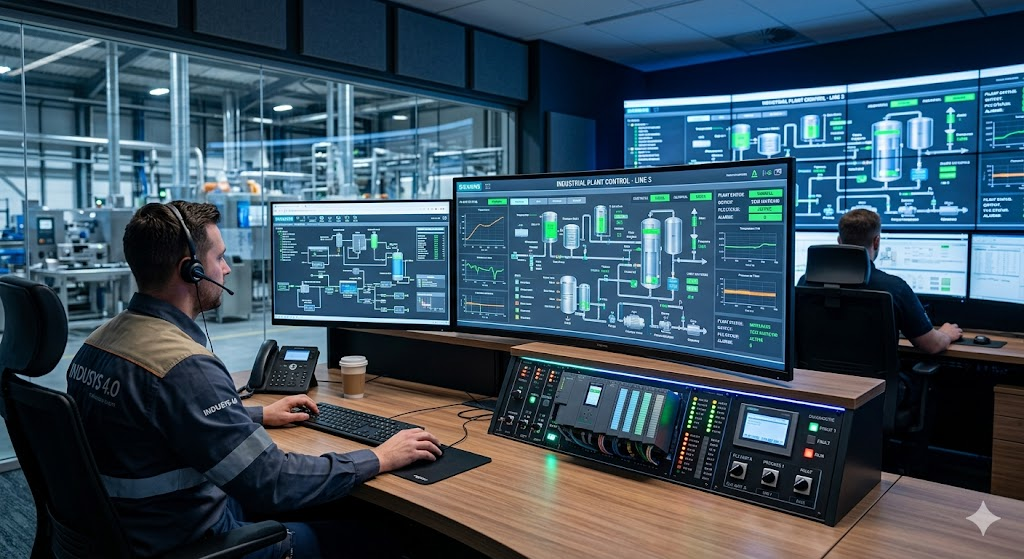
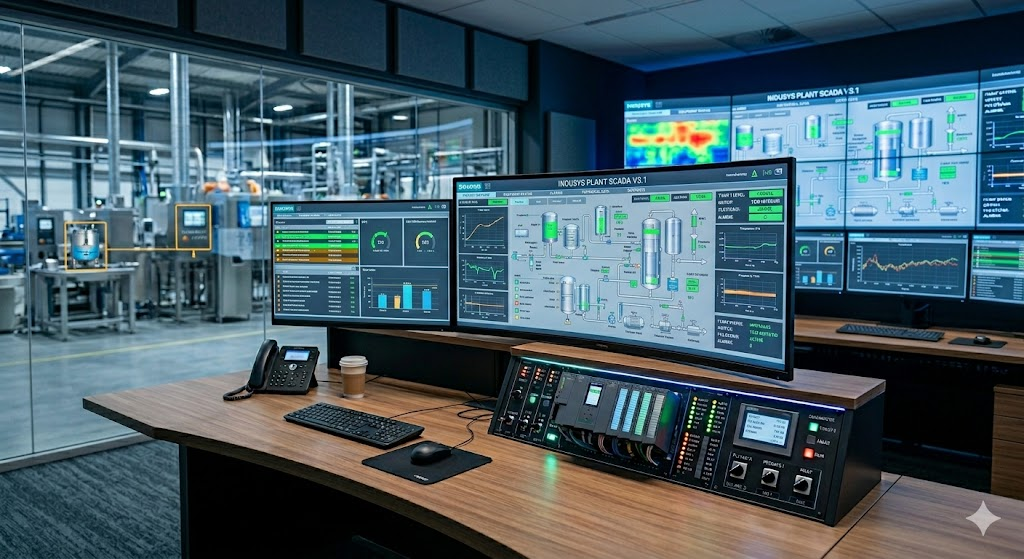
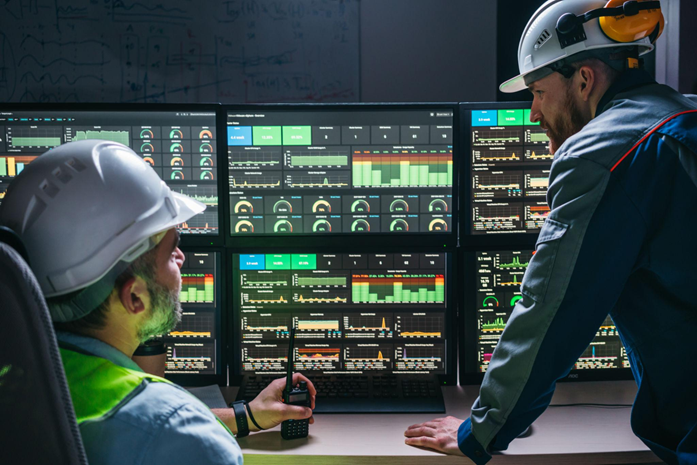
SCADA is a software system used to centrally monitor, control, and collect data from various industrial devices. It allows operators to view the condition of machines and industrial processes in real time through a visual dashboard.SCADA is typically connected to PLCs, sensors, RTUs (Remote Terminal Units), and various Industrial IoT devices to collect operational data from the field. This information is then displayed in the form of graphs, alarms, status indicators, and historical reports.With SCADA, companies can:
Monitor production in real time
Control machines from the control room
Receive automatic alarm notifications
Analyze historical operational data
Reduce production downtime
Perform remote monitoring
In modern implementations, SCADA systems are increasingly integrated with cloud computing and Industrial IoT, enabling secure monitoring access from multiple locations. Dashboard SCADA
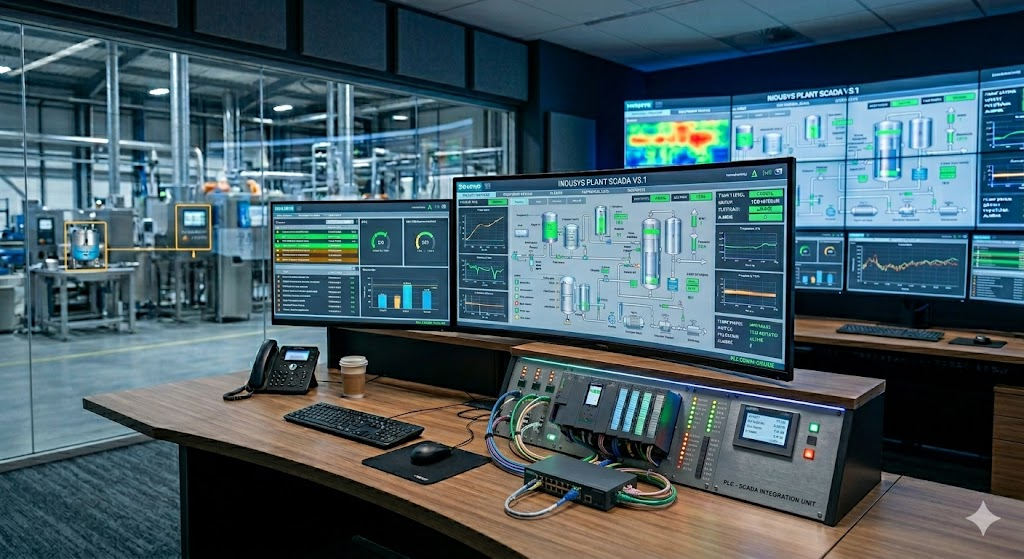
PLC and SCADA work together as an integrated system within industrial automation. The PLC is responsible for directly controlling machines and processes, while SCADA functions as the monitoring and supervisory system.The process begins when sensors send data to the PLC, such as temperature, pressure, liquid level, or motor speed. The PLC then processes this data based on the programmed logic and sends commands to the output devices.The operational data from the PLC is then transmitted to the SCADA system through industrial communication protocols such as:
Modbus
Profibus
Ethernet/IP
OPC UA
SCADA then displays this data through a visual dashboard that is easy for operators to understand. If an abnormal condition occurs, the system can trigger an automatic alarm, allowing operators to take immediate action.The integration of PLC and SCADA enables companies to implement a more efficient, responsive, and easily monitored control system with real-time visibility.PLC and SCADA technologies are used across nearly every modern industrial sector because they can improve operational efficiency, accuracy, and safety.Some examples of PLC and SCADA applications include:
Manufacturing Industry Used for production line automation, robotics, conveyor systems, and quality control.
Power Generation Used for monitoring substations, energy distribution, and controlling power generation systems.
Water and Wastewater Treatment Used to control pumps, tank levels, chemical dosing, and automated filtration systems.
Oil and Gas Industry Used for monitoring pipelines, pressure, flow meters, and operational safety systems.
Food and Beverage Industry Used to control mixing, filling, packaging, and cold storage monitoring processes.
Smart Factory and Industry 4.0 PLC and SCADA serve as key components for integrating production data with Industrial IoT and analytics systems.
Why Are PLC and SCADA Important for the Future of Industry?
PLC and SCADA are not merely technologies that support production; they have become the foundation of modern industrial transformation. With their capabilities in automation, real-time monitoring, and data integration, these two systems help companies improve operational efficiency while reducing the risk of downtime.Amid the development of Industry 4.0 and smart manufacturing, the demand for integrated automation systems will continue to grow. Companies that begin adopting PLC and SCADA technologies today will gain a competitive advantage in addressing the challenges of the industries of the future.ASP Automation is a trusted industrial automation partner, providing PLC, SCADA, and industrial automation solutions for various industrial sectors across Indonesia.